
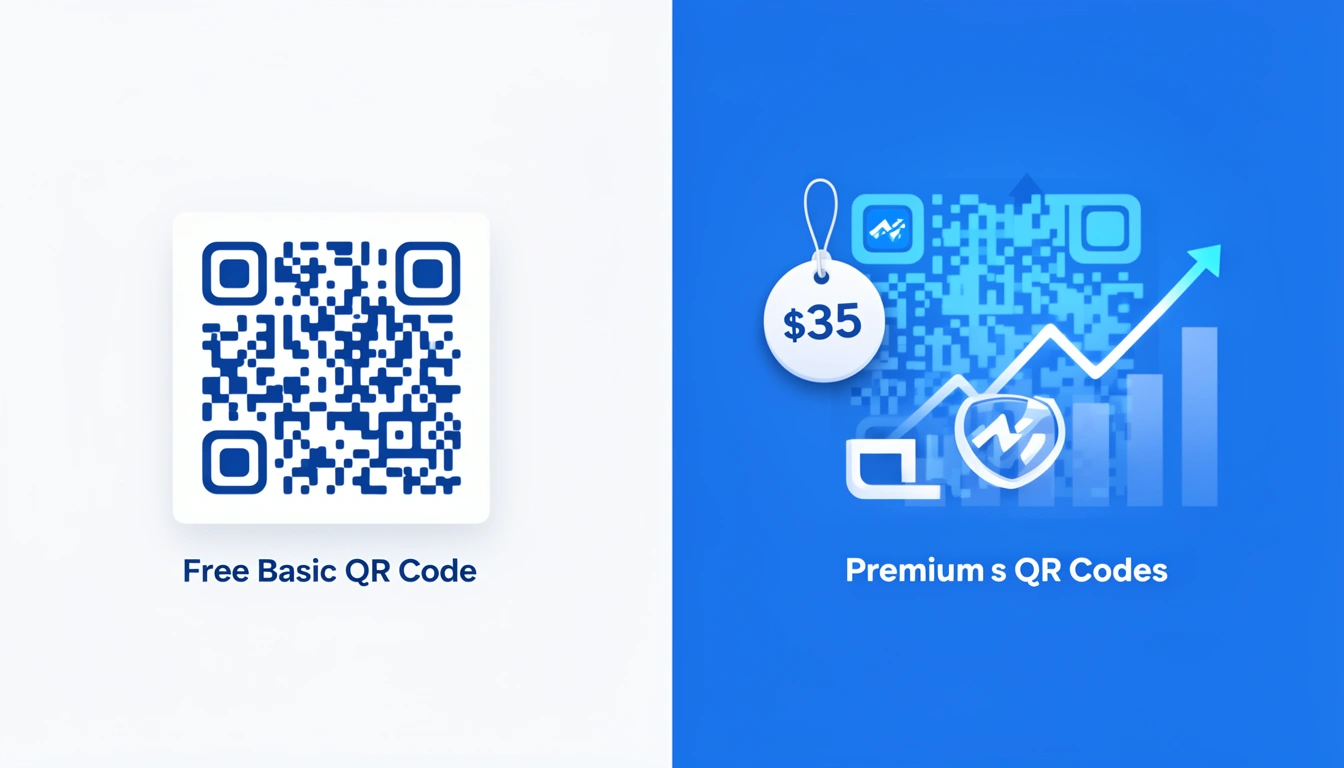
QR codes are everywhere. But if you're running a real campaign, free generators are a gamble. They're fine for a garage sale. For a product launch or a print run of 10,000 brochures? You need more control.
Here is when it makes sense to pay for QR codes, and what you actually get for your money.
What you're paying for
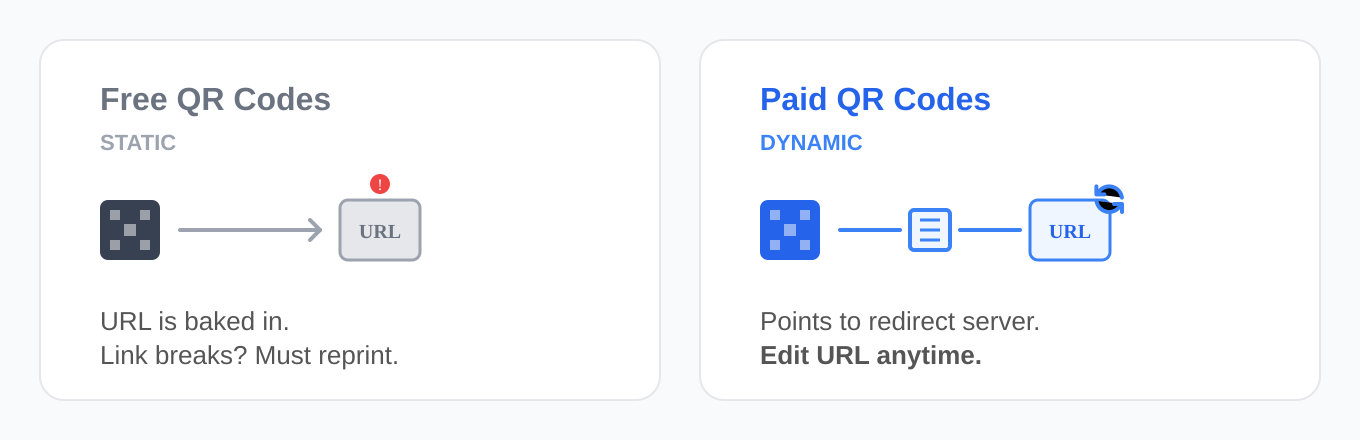
Free QR codes are almost always static. The URL is baked into the image. If the link breaks or you need to change it, you're out of luck you have to reprint everything.
Paid QR codes are dynamic. They point to a middleman server that redirects the user. This lets you swap out the destination URL at any time, without touching the printed code.
The features that matter
Analytics
Free codes are a black box. You print them, you hope people scan them, and you move on.
Paid services change that. You get timestamps, locations, device types (iOS vs Android), and browser data. Smler's link-level analytics visualizes this so you can see hourly or daily trends. If you're running a time-sensitive campaign, this is the only way to know if it worked.
The safety net
This is the big one. You print 10,000 flyers. Then you realize the landing page URL has a typo.
With a static code, you eat the cost of the reprint. With a dynamic code, you log in, change the redirect, and the problem is solved in 30 seconds. It also lets you run A/B tests or swap out seasonal promos without reprinting materials.
Branding
A black-and-white QR code works, but it looks like an afterthought.
Paid tools let you match your brand palette (check our guide on QR code colors), drop a logo in the center, or use different patterns like dot-style codes. You can also use custom branded domains so your links look like yourbrand.co/offer instead of random.app/x7z.
Bulk generation
Need 500 unique codes for a conference? Doing them one by one is a nightmare.
Paid services offer bulk generation. You upload a CSV or XLSX file, and the system spits out a folder of unique, trackable codes.
Pricing models
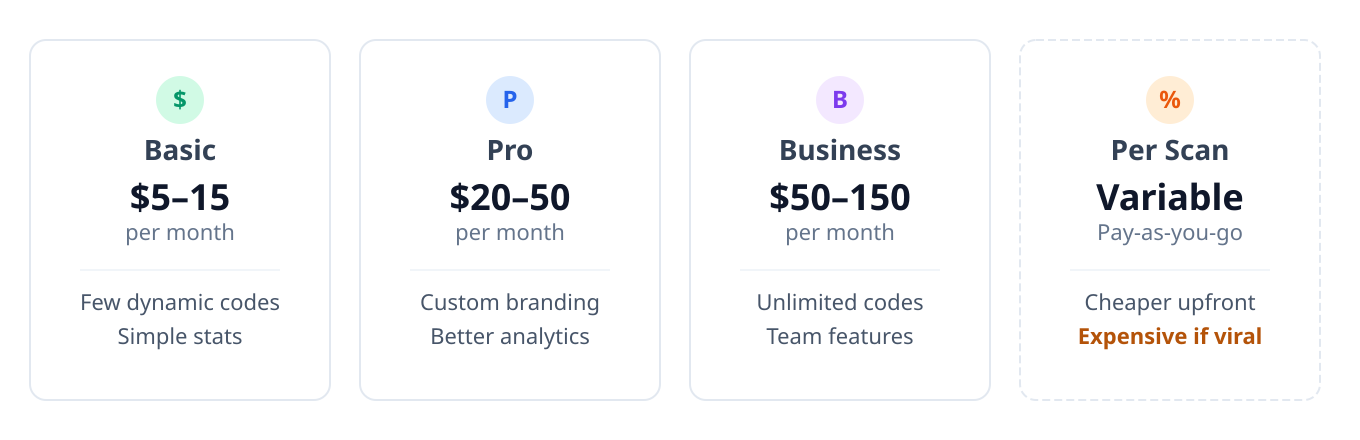
Most professional services follow a similar structure. You've got your Basic tiers ($5–15/month) for a few dynamic codes and simple stats. Pro tiers ($20–50/month) unlock custom branding and better analytics. Business tiers ($50–150/month) usually give you unlimited codes and team features.
Some platforms charge per scan. That looks cheaper upfront, but it gets expensive fast if a campaign goes viral.
When to pay for codes
You're spending money on print. If you're budgeting for flyers, packaging, or ads, the cost of a paid QR plan is negligible compared to the print cost. The ROI tracking alone justifies it.
You need compliance. In India, for instance, SMS campaigns require TRAI-compliant URLs with DLT headers. Free tools don't handle this.
It's a permanent install. Restaurant menus, museum exhibits, warranty cards. You can't easily swap these out. A dynamic code ensures you can update the PDF or landing page without drilling a new hole in the wall.
How Smler fits in
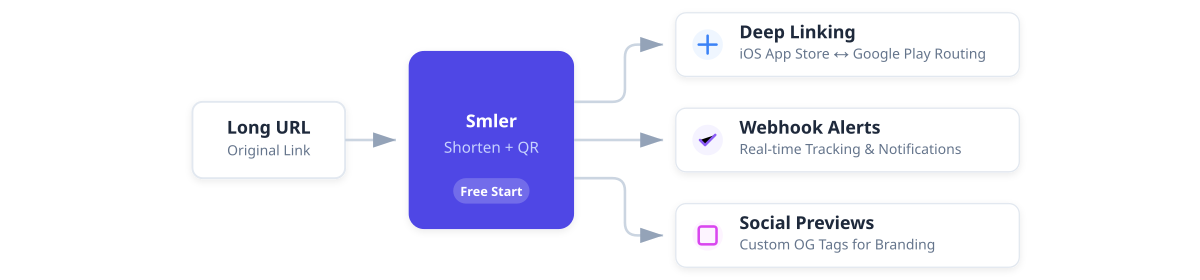
Smler combines URL shortening with QR generation. The main advantages are deep linking (routing iOS users to the App Store and Android users to Google Play), webhook alerts for real-time tracking, and custom OG tags for social previews.
You can test the basics with the free QR code generator and upgrade when you hit a wall.
Is it worth it?
Do the math. If you're spending $500 on print, a $15/month subscription is insurance. If you're flying blind without scan data, you're wasting the print budget anyway.
If you're just getting started, plan your design guidelines early. If you're ready to compare tiers, check out Smler's pricing or browse some innovative use cases for your next campaign.
Published with LeafPad