

QR codes aren't a novelty anymore. By mid-2026, people expect the physical world to connect to their phone instantly, match the brand they just saw, and land them on the right screen without a glitch. A static code slapped on a flyer with no tracking is a missed opportunity. If you want measurable engagement, you need dynamic QR codes built on deep links and real analytics — not just a black-and-white square that opens a webpage.
What changed in this update: this guide has been refreshed with a new best-practices section covering design, marketing, and tracking standards for 2026, deeper guidance on the customer support and event ticketing use cases, and a quick comparison of static vs. dynamic codes. The seven use cases themselves haven't changed — they're still the ones we see driving conversions.
Before diving into specific use cases, it's worth understanding why QR codes remain valuable in 2026. If you're new to the technology or want a quick refresher on the fundamentals, our beginner's guide to QR codes covers the essentials from the ground up. From reducing friction in customer journeys to providing measurable ROI on physical campaigns, the benefits of QR codes for business extend far beyond simple convenience.
Understanding the different QR code formats available is crucial for choosing the right solution for your needs. Whether you're working with static codes for simple applications or dynamic codes for advanced tracking, our comprehensive guide on types of QR codes breaks down each format and its best use scenarios. For straightforward text-based applications like contact info or WiFi credentials, plain text QR codes offer a no-frills approach that works reliably across devices. If you've ever wondered about the technical limits of this technology, our deep dive into how many possible QR codes there are explores the numbers behind the code.
Design also matters more than most teams realize. Strategic use of color, dot patterns, and icons can improve both scan rate and brand recognition — see our guides on QR code color best practices, dot QR codes, and icon QR codes. Green QR codes have also gained traction in sustainability-focused campaigns — our green QR code design guide covers how to keep them scannable while matching eco-friendly branding. And for large-scale physical placements, our guide on the largest QR codes ever created covers sizing considerations from a distance.
Here are seven use cases that actually convert, followed by the best practices that make them work.
1. Frictionless App Acquisition & Onboarding

Deferred deep linking is the fix for app install drop-off. When a user scans, the system detects their OS and routes them to the App Store or Google Play. The key part happens after install: the deferred deep link passes the campaign context along, so the user opens the app and lands on the specific promo page they scanned — not a generic home screen. That single detail is usually the difference between a converted user and an abandoned install.
2. Smart E-Commerce Product Packaging
Most packaging is dead space once the box is opened. A dynamic QR code changes that by letting you swap the destination without reprinting anything.
At launch, the code can point to an unboxing video. A month or two later, swap it for a warranty registration form. During a seasonal sale, switch it to a discount on related products. The box stays the same; the engagement evolves with it, and you never pay for a new print run just to change a link.
3. Measurable Out-Of-Home (OOH) Advertising

Billboards and posters have always been a black box for ROI — you pay for the spot but rarely know who actually visited. Unique, trackable QR codes on each creative fix that.
With link-level analytics, you can see device types, time-of-day patterns, and general location for every placement. You might find the bus stop ad drives far more scans than the subway poster next to it — the kind of granular data that used to live only in digital ad platforms now works for physical placements too.
4. Omnichannel Customer Support Routing
Nobody wants to navigate a support menu on their phone while standing in front of a broken appliance. An intelligent QR code on the product or receipt should skip the menu entirely.
A well-built support flow usually looks like this:
- Scan the code on the product, box, or receipt.
- Auto-detect the SKU or model number encoded in the link, so the customer never has to type it.
- Route directly into a pre-filled WhatsApp chat, support ticket, or troubleshooting page for that exact product.
- Fall back to a general support page if the specific flow isn't available in the customer's region or language.
This saves the customer from typing out model numbers and saves your agents from asking "what model is it?" on every single call. For high-volume support lines, that shaved-off step adds up quickly across thousands of interactions.
5. Trust-Building Retail Displays
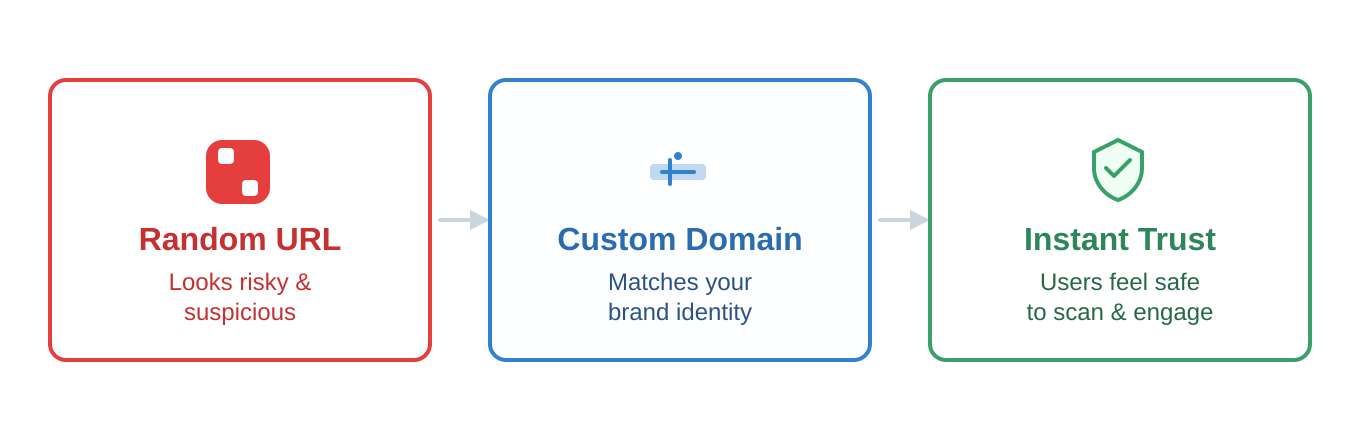
People are wary of QR codes now — a random, shortened URL can look like a phishing attempt, and users hesitate before scanning.
Custom domains fix that. When the URL inside the code clearly matches your brand, it looks professional and safe. Using branded custom domains is a simple way to build trust at the exact point of interaction, right when a shopper decides whether to scan or walk away.
6. Dynamic Event Schedules and Ticketing
Paper schedules are a liability. If a keynote speaker cancels or a room changes an hour before doors open, you're stuck with outdated information in thousands of hands.
Print a dynamic QR code on badges or table cards instead. If the agenda shifts, you log in and update the destination — attendees scan the same badge and see the new schedule immediately. This also handles edge cases a static print never could: multi-day events where the agenda changes daily, last-minute venue swaps, or capacity limits on a popular session that need to be communicated in real time. No reprints, no confused crowds at the wrong door.
7. Direct Screen-to-App Loyalty Transitions
QR codes aren't just for physical objects — they bridge screens too. Getting someone from a desktop browsing session to your mobile app is usually clunky, and a lot of intent gets lost in that jump.
Display a QR code on the checkout page. The shopper scans it, downloads the app, and their cart is already waiting for them inside. This works especially well for loyalty programs, where the goal is moving casual desktop browsers into a dedicated app environment they'll keep coming back to.
QR Code Best Practices for 2026: Design, Marketing, and Tracking
The QR campaigns that actually convert in 2026 combine three things: a design that scans reliably, a dynamic link that can be tracked and updated, and a clear reason to scan. Skip any one of these and your scan rate drops, no matter how good the offer is.
QR code design best practices that affect scan rates
- Contrast: keep dark modules on a light background. Inverted or low-contrast color combinations are the most common reason a code fails to scan.
- Size: scale the code to its viewing distance — a code on a business card needs far less real estate than one on a billboard. See our guide on the largest QR codes ever created for how far sizing can be pushed.
- Error correction: use a higher error-correction level whenever you're adding a logo, dots, or color, so the code still resolves if part of it is obscured. Our dot QR code and icon QR code guides cover this in detail.
- Quiet zone: leave a clear margin around the code so scanners can lock onto it quickly, especially on busy packaging.
- Test before you print at scale: scan the final design on at least a few different phones and lighting conditions before committing to a large print run.
QR code marketing best practices for higher conversion
- Always use dynamic links so you can change the destination without reprinting a single flyer, box, or badge.
- Pair the code with a one-line call to action — "Scan for 20% off" converts far better than a bare code with no context.
- Use branded custom domains so the URL builds trust instead of triggering phishing suspicion.
- Track every placement separately with link-level analytics so you know which creative, location, or channel is actually driving scans.
- Stay compliant in regulated markets — for SMS-linked campaigns in regions like India, make sure links carry the required DLT headers so messages aren't blocked before they reach the customer.
Static vs. dynamic QR codes: which one for which job
| Factor | Static QR code | Dynamic QR code |
|---|---|---|
| Editable after printing | No | Yes |
| Analytics | None | Location, device, time, and scan trends |
| Best for | Permanent, one-off information (e.g. WiFi password) | Campaigns, packaging, ads, events |
How Do You Upgrade From Static QR Codes to a Real Strategy?
Start by moving off static generators and onto a platform that gives you real-time tracking, custom branding, and app fallbacks — that's the difference between a code that just opens a link and one that reports back on every scan.
If you're testing the waters, start with our Free QR Code Generator. For organizations needing more advanced features, our Paid QR Codes: Complete Guide & Pricing 2026 covers plans and scalability considerations. Once you roll codes out, check our guide on how to properly track your QR codes to make sure you're actually capturing the data you need.
Frequently Asked Questions
What are the best QR code marketing practices for 2026?
Use dynamic, trackable links instead of static ones, pair every code with a clear call to action, brand the URL with a custom domain, and track each placement separately with link-level analytics. In regulated markets, make sure SMS-linked campaigns include the required compliance headers so they aren't blocked.
What are general QR code best practices businesses should follow?
Keep contrast high, size the code for its viewing distance, use dynamic links so destinations can change without reprinting, and test on multiple devices before a large print run. Combine this with analytics so you can see which placements and creatives are actually driving scans.
What are QR code design best practices?
Maintain strong contrast between the code and background, use adequate size and a clear quiet zone, and raise the error-correction level whenever you add a logo, color, or dot pattern. These details determine whether a code scans instantly or fails and frustrates the customer.