
QR Code Shirts: The Complete Marketing Guide for T-Shirts and Apparel
A qr code shirt turns anyone wearing your brand into a trackable, interactive touchpoint instead of a logo people glance past. This guide covers how a qr code shirt actually works, how to design and print a qr code t shirt that survives the wash, where the scan should lead, and how to track results so every new batch performs better than the last.
What Is a QR Code Shirt and How Does It Work?

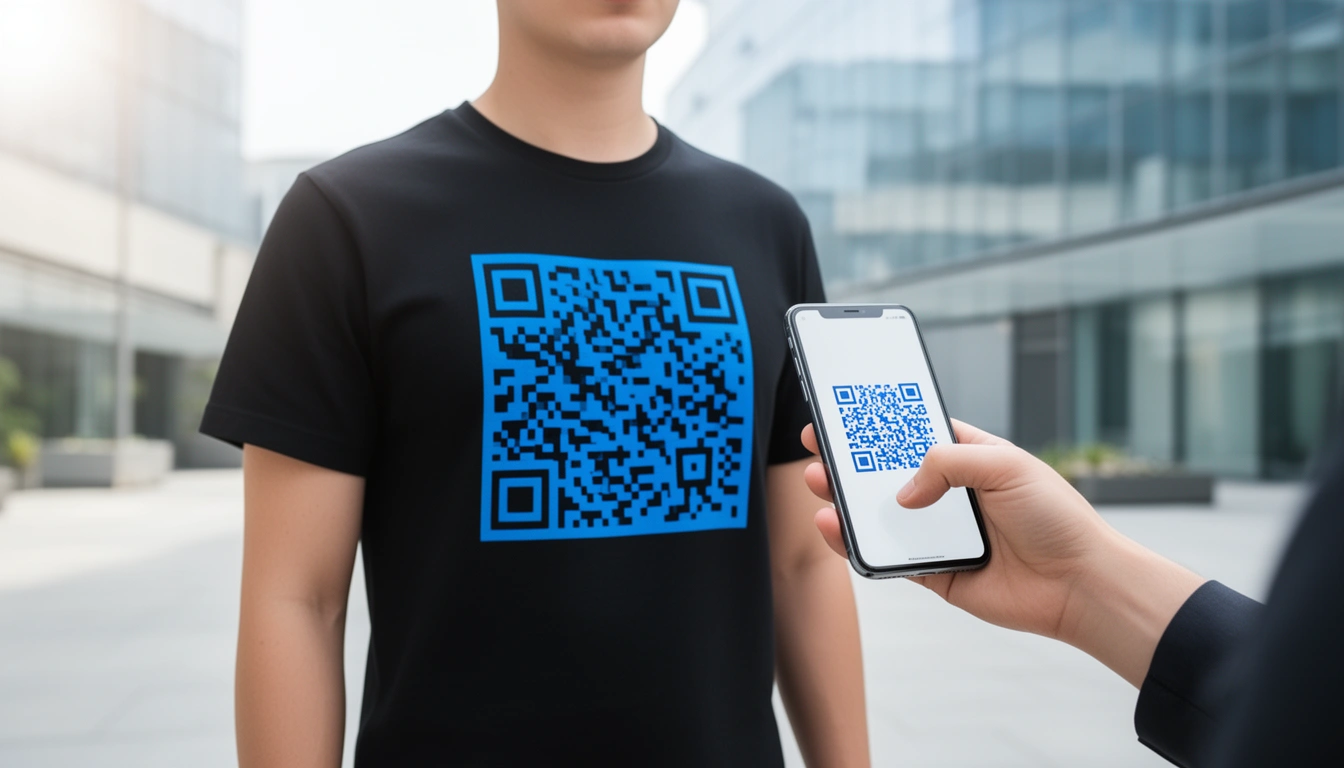
A qr code shirt is a t-shirt or tee printed with a scannable code that connects a physical garment to a digital destination, such as a discount page, a video, a signup form, or an app listing. Someone points their phone camera at the shirt, the code opens a link, and you can see exactly who scanned, where, and when.
A person wearing your branded shirt was already a walking ad. Add a code and they become a measurable one. There's also something oddly compelling about seeing a code on someone's chest: people instinctively want to know where it goes, and that curiosity is what makes a shirt with a QR code work harder than a plain logo tee.
How Do You Put a QR Code on a T-Shirt?
Putting a QR code on a t-shirt takes five steps: generate a code linked to a tracked URL, size it at least 2x2 inches, pick a placement that won't distort when the fabric stretches, choose a print method that survives repeated washing, and test the scan on real fabric before printing a full run.
- Generate the code with a reliable QR code generator pointed at a shortened, trackable URL rather than a raw link.
- Set the error correction level to 30% so the code still reads after wrinkling, fading, or stretching.
- Export as a vector file (SVG or EPS) so the printer can scale it without the code turning fuzzy.
- Pick the print method based on order size and how long the shirt needs to last.
- Test on the actual fabric, in different lighting, with more than one phone, before committing to a full batch.
What Makes a Good QR Code T-Shirt Design?
A good qr code t shirt design uses a code at least 2x2 inches, high contrast between the code and the shirt color, a clean quiet zone around the edges, and a short call-to-action line like "Scan for 20% off" printed right next to it. Skip any of those four and scan rates drop fast.
Center chest is the safest placement, but sleeves and back pockets can work if you size the code up to compensate for the smaller flat area. Avoid anywhere the fabric bunches, seams cross, or the print stretches when someone moves.
Contrast is non-negotiable. Creative QR code designs with brand colors are fine, but test them before printing: black on white scans reliably, navy on light gray usually works, anything lower-contrast needs a real-world test first. If you want the code to double as a brand mark, our guide to creating QR codes with a logo in the center shows how to add a logo without breaking scannability. Call-to-action text also matters more than it should: "Scan for discount" or "Scan to join" noticeably lifts scan rates compared with the code sitting there unexplained.
Where Should a QR Code on a Shirt Link To?

A QR code on a shirt should link to something specific that feels earned, not a generic homepage. Send scanners to a discount, exclusive content, early access, or a community they can actually join, whether that's a Discord, a signup form, or a hashtag campaign.
If it's an event shirt, link to the schedule or networking platform. If it's a recruiting shirt, link to a job board with a pre-filled application. Some brands take it further and route the scan into an app experience using QR code deep links for offline marketing, so scanners land directly inside a relevant screen instead of a generic web page.
Use a URL shortener with analytics so you can track performance and swap the destination later without reprinting anything. The shirt might last two years; your campaign shouldn't be stuck on the same offer that long.
What Printing Method Works Best for QR Code Apparel?
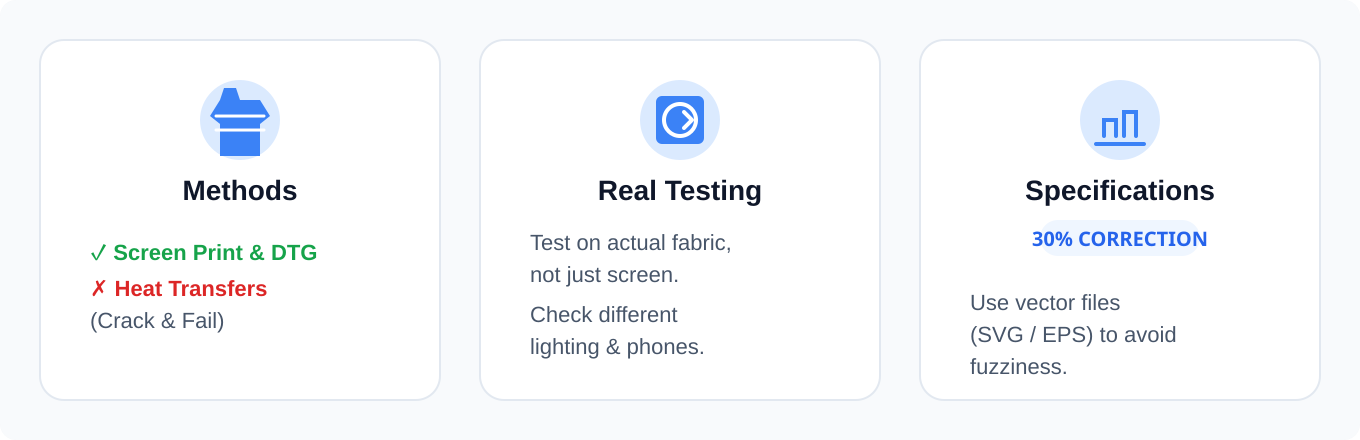
Screen printing and DTG (direct-to-garment) both hold up well for QR code apparel because the ink sits on top of and inside the fibers. Heat transfers are the least reliable option for a scannable code: the vinyl or transfer layer cracks after a handful of washes and the code stops reading.
| Method | Durability for QR codes | Best for |
|---|---|---|
| Screen printing | High | Bulk runs, saturated single or two-color codes |
| DTG | Medium-high | Small batches, detailed or multi-color designs |
| Vinyl heat press | Medium | Short-term event or giveaway shirts |
| Heat transfer | Low, cracks within weeks | Not recommended for scannable codes |
Whichever method you choose, generate the code with a QR code generator with tracking built in, so you're not left with a print-ready image but no visibility into who actually scanned it.
How Do You Track the Performance of QR Code Shirts?
Track qr code shirt performance by giving each shirt batch its own code, then comparing scan rate, geography, timing, and post-scan conversion across batches. The distribution method, whether it's an employee shirt, an event giveaway, or a paid merch item, usually affects scan behavior more than the design does.
- Scan rate: scans divided by shirts distributed
- Geographic spread: where your shirts end up being worn and scanned
- Timing: whether people scan at the event itself or weeks later
- Conversion: what scanners actually do once they land on the destination
For a deeper walkthrough of setting this up, see the full guide on how to track QR codes. Analytics tools can then show which design, placement, and destination combination performs best so you can carry that into the next print run.
Real Examples: Brands Using QR Code Shirts and Tees
Brands that get the most out of qr code shirts send scanners somewhere that feels worth the effort, not a generic landing page. Patagonia's traceable down jackets carried QR codes linking to supplier information, including where the down came from and how the animals were treated, and people scanned because the content felt worth finding.
Festival shirts work well when the code unlocks something time-sensitive. One music festival gave performer shirts to staff, each linking to backstage videos that rotated throughout the weekend, turning the shirts into content passes. A startup printed recruitment codes on employee shirts for conferences, and developers who scanned went straight to job listings with a pre-filled application, generating 47 qualified applications over six months tracked entirely through shirt scans.
The common thread across all three: each code went somewhere specific, and the destination was worth the scan.
What Mistakes Ruin QR Code T-Shirt Campaigns?
The four mistakes that ruin qr code shirts are printing the code too small, linking to a generic homepage, skipping mobile optimization on the destination, and ignoring wash durability. Any one of these can quietly kill scan rates even when everything else about the shirt looks great.
Too small. A 1-inch code looks clean but fails in the real world at normal scanning distance.
Generic destination. Sending people to your homepage wastes the interaction. They scanned expecting something specific, so give them something specific.
Not mobile-optimized. The destination has to load fast and display correctly on a phone; this seems obvious until you see how many campaigns skip it.
Ignores durability. If the code cracks or fades after three washes, your campaign has a three-week lifespan.
How Do You Start a QR Code Shirt Campaign?
Start a qr code shirt campaign by defining the goal first, community building, recruiting, sales, or event engagement, since each goal needs a different destination and a different success metric. Build and test that destination before you print a single shirt.
Use branded short links in your QR codes. They build trust and stay memorable if someone chooses to type the URL instead of scanning. Print a small test batch, distribute it to people who'll actually wear it and give honest feedback, then iterate before the full run.
For more on QR strategy generally, see the full guide on QR codes in marketing campaigns.
FAQ
Can you put a QR code on a t-shirt?
Yes. Any print method that holds fine detail, such as screen printing or DTG, can carry a QR code, provided the code is at least 2x2 inches and printed with a high error correction level so wrinkles and fading don't break it.
How big should a QR code be on a shirt?
At least 2x2 inches for chest placement, scannable from roughly arm's length. Smaller codes look cleaner but routinely fail to scan, which is the single most common mistake on qr code tees.
Do QR codes on shirts actually work?
Yes, when the design is sized correctly and the destination is worth the scan. Campaigns that link to a discount, exclusive content, or a job listing consistently outperform ones that link to a plain homepage.
What should a QR code on a shirt link to?
Something specific: a discount page, exclusive content, a signup form, an event schedule, or a job application. Avoid linking to a generic homepage, since that wastes the moment someone chose to scan.
How long do QR codes last on a printed shirt?
It depends on the print method. Screen printing and DTG typically hold up through many washes; heat transfers often crack and become unscannable within a few weeks, so they're not recommended for anything meant to last.