
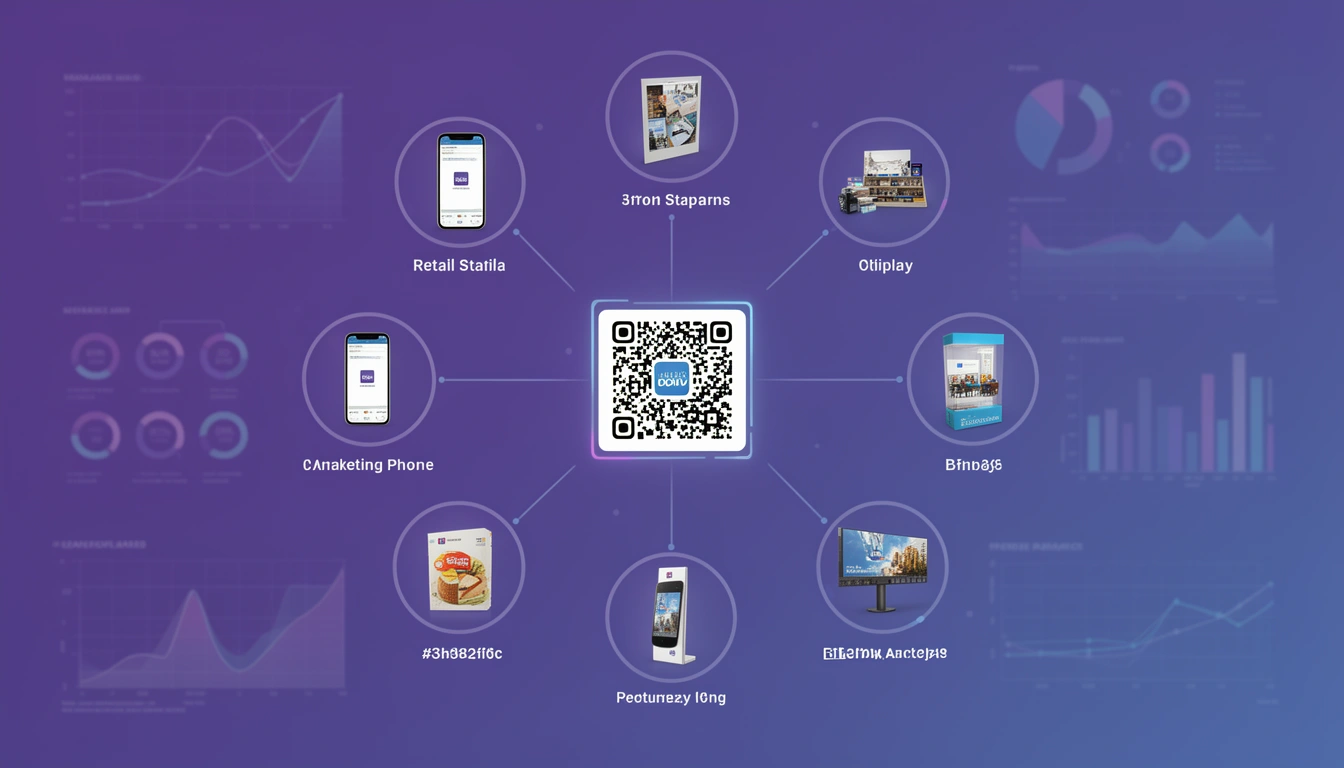
QR codes used to be a gimmick. Then the pandemic hit, and suddenly everyone knew how to use them. In 2026, they're just part of the furniture — but that doesn't mean they're easy to get right.
They bridge the gap between physical stuff — packaging, flyers, billboards — and digital tracking. If you're running a store, a restaurant, or just plastering ads on walls, QR codes let you track things that used to be a guessing game.
What changed in this update: we've refreshed the placement guidance, added a platform comparison for teams choosing tools in 2026, deepened the tracking and testing section with an actual measurement process, and added an FAQ so you can jump straight to the answer you need instead of reading top to bottom.
Why do QR codes still matter in 2026?

QR codes matter because scanning is now second nature and the data behind each scan is where the real value sits. The novelty wore off years ago. What's left is utility: you show a code, someone scans it, they get the thing. Done.
The real value isn't the scan itself — it's the data. You can see who scanned, when, where, and on what device. That turns a flyer in a mailbox into a measurable click. Tools like Smler's QR code generator with tracking create codes that look professional and feed data straight into your analytics dashboard, so a single physical placement stops being a black box.
Where should you place QR codes in a marketing campaign?
The right placement depends on how much attention the viewer has and what action you want next. Here's how the most common placements compare:
| Placement | Best use | Key tip |
|---|---|---|
| Product packaging | How-to videos, sourcing info, discounts | Tell them what they get — "Scan for 10% off" outperforms a mystery code |
| Print ads and direct mail | Measuring placement ROI | Use bulk URL shortening to generate a unique code per mail piece or recipient |
| Flyers and handouts | Events, local promotions, launches | Size, contrast, and a clear call-to-action matter more than design flair — see the flyer design guide |
| In-store signage | Product specs, comparisons, after-hours browsing | Account for viewing distance and indoor lighting — see the sign design guide |
| Events | Badge check-ins, digital business cards, lead capture | Pair with deep linking to send people straight into your app |
| Merchandise and apparel | Turning wearers into mobile touchpoints | Chest or back placement works best — see the t-shirt marketing guide |
| Social media | Bridging offline audiences to profiles or Messenger | See the Facebook QR code guide for printed-material tie-ins |
| Banners and signage | Street banners, trade shows, storefronts | Size for viewing distance — see the banner design guide |
| Vouchers | Referral programs, loyalty cards, flash sales | Real-time redemption data beats paper coupons — see the voucher strategy guide |
Whatever the placement, the pattern holds: give someone a specific reason to scan, and make the scan easy given the context they're in.
How do you design a QR code people will actually scan?

The codes that get scanned are branded, specific about the payoff, and land on a mobile-first page. Plain black and white still works technically, but branded codes perform better in practice. Match your colors, keep contrast high, and consider putting your logo in the center — Smler lets you create QR codes with your logo in the center, which helps with recognition.
Never assume people will scan just because the code is there. Be specific: "Scan for 20% off," "Watch the video," or "See reviews." And make sure the landing page is mobile-first — a QR code leads to a phone, and a desktop-shaped page that takes several seconds to load costs you the conversion you just earned. Use custom OG tags so the link still looks good if someone shares it later.
Design also affects whether people bother in the first place. Boring codes get ignored; creative, well-designed ones catch the eye. For inspiration, check out these interesting QR code examples that blend form and function, or the lighter side of the format in QR codes for fun: 15 creative ideas and projects.
How do you track QR code marketing performance?
You track QR code performance by watching scan rate, time and location, and conversion rate — then testing variations against each other rather than guessing which one is working. A single number in isolation tells you almost nothing; the value comes from comparing.
| Metric | What it tells you |
|---|---|
| Scan rate | Did the placement earn attention? Low scan rate usually points to size, contrast, or a weak call-to-action |
| Time and location | When and where people scanned — useful for spotting which physical placement or region is actually working |
| Device and OS breakdown | Confirms whether your landing experience matches how people are actually arriving |
| Conversion rate | Did the scan turn into a signup, purchase, or download — the metric that ties the code back to revenue |
A simple process for testing:
- Generate a separate short link and QR code for each variation you want to test — a different offer, headline, or placement.
- Run them for the same time window so you're not comparing a weekend flyer to a weekday one.
- Pull scan and conversion data from your analytics dashboard and compare like against like.
- Keep the winner, retire the loser, and roll the next variation into the same slot.
Smler's link-level analytics gives you the geographic data, device breakdowns, and time trends needed to run this loop without guesswork.
What advanced QR code strategies actually move the needle?
The strategies that separate a decent campaign from a genuinely measurable one are dynamic destinations, deep linking, and cross-channel attribution.
| Tactic | What it solves |
|---|---|
| Dynamic QR codes | Change the destination after the code is already printed — fix a broken link or swap an offer without reprinting anything |
| Deep linking | Scan a code and land directly on the specific product page inside your app instead of a generic homepage. If the app isn't installed, deferred deep linking routes people to the right place after they install it |
| Attribution | Connects offline placements to online sales, so you can finally tell whether that expensive print ad actually drove traffic |
These three tactics work together: dynamic codes keep your physical materials evergreen, deep links keep the app experience frictionless, and attribution tells you whether the whole effort was worth the budget.
Which QR code platform should you use in 2026?
Choose a platform that combines QR generation with link-level analytics, branded domains, and bulk creation — treating QR codes as a standalone generator with no tracking behind them wastes the entire point of using them for marketing. A few things worth checking before you commit:
- Custom domains and branding: a shortened URL under your own domain builds more trust than a generic one, and it's what shows up if someone screenshots or shares the link.
- Bulk generation: if you're running direct mail, packaging, or multi-location signage, you need to upload a CSV or spreadsheet and generate hundreds of unique codes at once rather than one at a time.
- Compliance headers: if any part of your campaign touches SMS, markets with regulatory requirements — like India's Trai DLT rules — need compliance-ready links so campaigns don't get blocked.
- Deep linking support: if you have a mobile app, confirm the platform supports iOS Universal Links and Android App Links with fallback URLs, not just a generic redirect.
- Team access: if more than one person manages campaigns, look for shared plans that support multiple team members without duplicating accounts.
Smler's QR code generator covers these together, so the same link that powers your QR code also feeds your analytics, respects compliance requirements, and works whether the scan happens in-store, in the mail, or on a t-shirt.
What QR code mistakes should you avoid?
The most common mistakes are sizing codes too small for the viewing distance, placing them where there's no signal, and forgetting a fallback for people who can't scan. Tiny codes on huge billboards get zero scans — no one can hold a phone steady enough at that distance. Codes on subway walls fail for a different reason: no signal, no landing page, no conversion. Use some common sense: match the code size to how far away the viewer will be, and always include a text URL as a backup for anyone who can't or won't scan.
Do QR code marketing campaigns actually work?
Yes, when the placement gives people something useful instantly. Retailers using codes on receipts for feedback see notably strong response rates, and restaurants using them for menus tend to see higher add-on sales because the images render better on a screen than on paper. The common thread across every example that works: the scan led somewhere genuinely worth the two seconds it took.
Want to see what this looks like in practice? Real brands are running QR code campaigns right now — some sharp, some fumbled. We've collected the best QR code examples from actual ad campaigns and broken down what worked, what flopped, and why. Theory only gets you so far; seeing how companies execute — or don't — is where the practical lessons live.
FAQ: QR codes in marketing
Do QR codes still work for marketing in 2026?
Yes. Scanning behavior is now routine, and the value has shifted from novelty to measurable data — scan location, device, and conversion tracking that a printed flyer or poster couldn't give you on its own.
What's the biggest reason a QR code campaign underperforms?
Usually it's a mismatch between context and code: too small for the viewing distance, no clear reason to scan, or a landing page that isn't mobile-first. Fix those three before touching design.
Should every QR code be trackable?
If it's going into a marketing campaign, yes. A code with no tracking behind it gives you a scan with no data — you can't tell if the placement, offer, or design is what's working or failing.
Can QR codes be changed after they're printed?
Yes, if you use a dynamic QR code. The printed code stays the same, but you can update the destination link behind it, which is useful for fixing errors or swapping offers without reprinting materials.
Do QR codes need a fallback for people who can't scan?
Yes. Always print a short text URL alongside the code so someone without a working camera, signal, or app can still reach the destination manually.
Find where people interact with you physically. Give them a specific reason to scan. Design the code well, test variations, and watch the data. QR codes aren't experimental anymore — they're a utility. Use them right, and you get data you didn't have before.
Published with LeafPad