
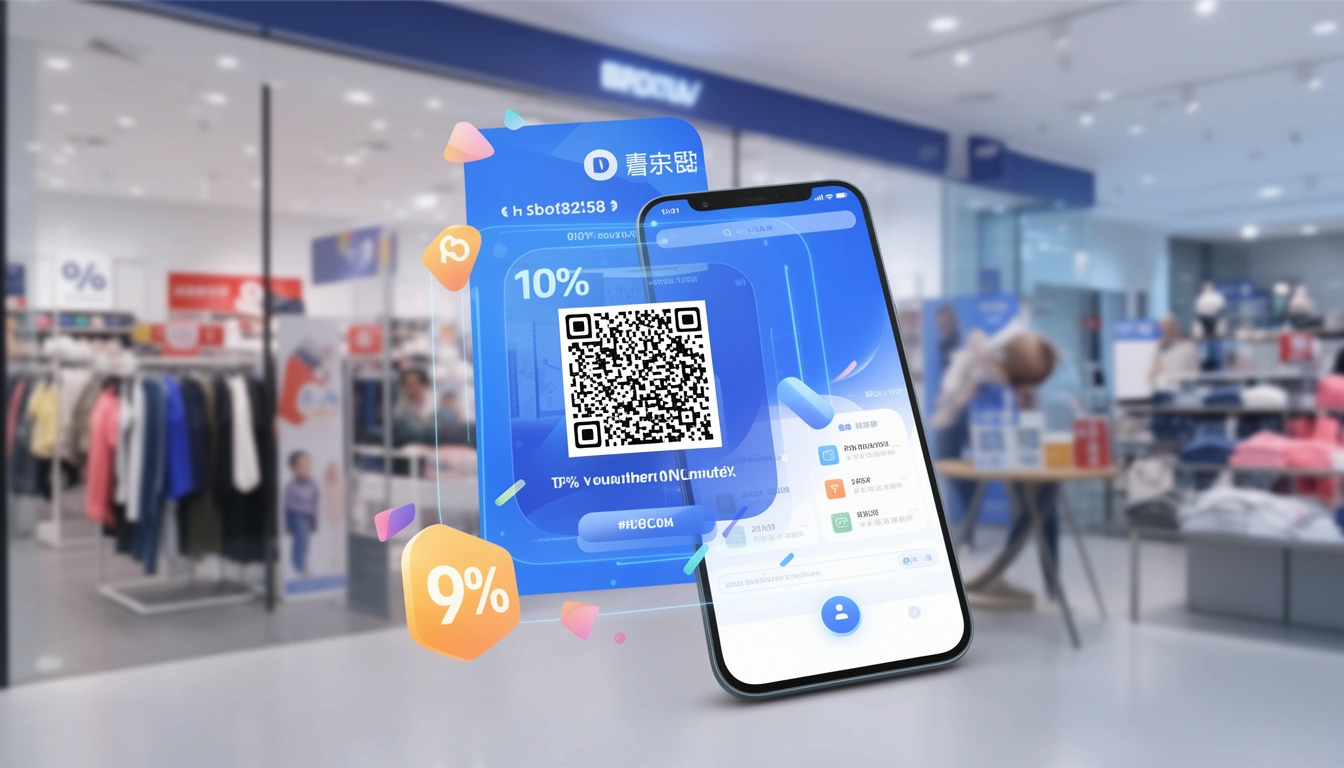
QR codes have changed how businesses handle vouchers. They've made the whole process trackable and, honestly, much less annoying for customers. Whether you're running a restaurant promo, a retail discount, or event ticketing, QR code vouchers are a solid alternative to paper coupons which usually end up crumpled in a pocket or in the trash.
Here's how to create, distribute, and track QR code vouchers that actually work.
What Are QR Code Vouchers?
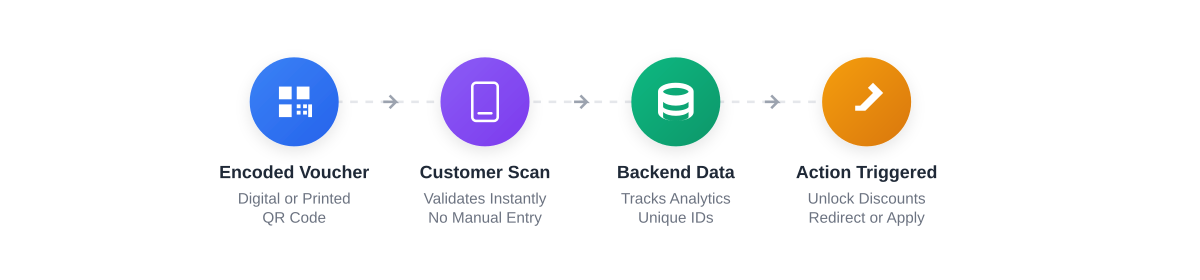
QR code vouchers are digital or printed promotional codes that customers scan with their phones to redeem discounts or offers. Unlike traditional vouchers that require manual entry or physical presentation, QR code vouchers validate instantly and give you data on the back end.
These vouchers typically contain encoded information like discount codes, unique identifiers, or URLs. When scanned, they can trigger actions applying a discount automatically, unlocking content, or directing users to a specific page.
Why QR Code Vouchers Beat Traditional Coupons
Fraud prevention. Each QR code voucher can contain a unique identifier, making duplication nearly impossible. Printable coupons can be photocopied. Digital QR vouchers can't.
Real-time tracking. You can monitor exactly when and where vouchers are redeemed. This data helps you see which campaigns perform and which don't, so you're not guessing next time.
Less friction. Customers scan and redeem. No typing long codes. No cutting out newspaper coupons. This simplicity increases redemption rates.
Cost efficiency. Digital distribution cuts printing and distribution costs. It also reduces the environmental impact of paper vouchers.
Instant updates. Made a mistake in your promotion? With QR code vouchers linked to URLs, you can update the offer without reprinting anything.
Types of QR Code Vouchers for Different Business Models
Percentage Discount Vouchers
Retail and e-commerce use these most often. When scanned, they can direct customers to a landing page with an auto-applied discount code or display a code to enter at checkout.
Fixed Amount Vouchers
Restaurants and service businesses tend to prefer these. They provide a specific dollar amount off and work well for high-ticket items where percentage discounts might seem less tangible to the customer.
Buy-One-Get-One (BOGO) Vouchers
Popular in food and beverage. BOGO vouchers encourage larger purchases and are highly shareable, often going viral on social media.
Limited-Time Flash Sale Vouchers
Link QR codes to time-sensitive offers to create urgency. These work well when distributed through SMS campaigns or social media stories.
Tiered Vouchers
Reward bigger spenders with graduated discounts spend $50 for 10% off, $100 for 20% off. QR codes can route to dynamic pages that calculate the appropriate discount based on cart value.
How to Create Effective QR Code Vouchers

Define Your Campaign Goals
Before generating QR codes, clarify what you want. Are you driving foot traffic to physical stores? Clearing seasonal inventory? Acquiring new customers? Your goal determines your voucher structure and distribution strategy.
Choose Your QR Code Platform
Use a professional URL shortener with QR code generation capabilities like Smler's QR Code Generator. This ensures you can track scans, update destinations, and maintain professional branding.
Key features to look for:
- Analytics and tracking capabilities
- Custom branding options
- Dynamic QR codes that can be updated
- Bulk generation for large campaigns
Design Your Voucher
Your QR code voucher needs both digital functionality and visual appeal. Consider these design elements:
Visual hierarchy. Place the QR code prominently but ensure the offer details are clearly readable without scanning.
Brand consistency. Use your brand colors and logo. Smler allows you to create branded links that reinforce your identity.
Clear call-to-action. Include phrases like "Scan to Save 25%" or "Scan for Your Exclusive Offer."
Expiration date. Create urgency by displaying when the voucher expires.
For more insights on designing compelling QR codes, check out our guide on interesting QR codes with creative designs.
Set Up Your Landing Page
Your QR code should direct users to a mobile-optimized landing page that confirms the offer details, provides clear redemption instructions, includes a unique code if needed for online purchases, and captures customer information (optional, but valuable for retargeting).
Use custom OG tags to ensure your voucher links display correctly when shared on social media.
Implement Tracking
Leverage link-level analytics to monitor scan rates by location, device, and time; conversion rates from scan to redemption; and customer demographics and behavior patterns.
This data helps you optimize current campaigns and plan future promotions.
Distribution Strategies That Maximize Redemptions
Email campaigns. Include QR code vouchers in promotional emails. Use bulk shortening to create unique codes for segmented audiences.
Social media. Share voucher graphics on Instagram, Facebook, and Twitter. Our Facebook QR codes guide provides platform-specific best practices.
Physical locations. Print QR vouchers on receipts, packaging inserts, or window displays. Learn more about effective QR code sign design.
SMS marketing. Send time-sensitive vouchers via text message. If you're operating in India, ensure TRAI compliance with proper headers.
Partnership channels. Collaborate with complementary businesses to cross-promote vouchers and expand your reach.
Best Practices for QR Code Voucher Campaigns
Always test before launching scan your QR codes across multiple devices and operating systems to ensure they work.
Create exclusivity with "VIP" or "Exclusive Member" vouchers that aren't publicly available. Segment your audience; new customers might need a bigger incentive than loyal repeat buyers.
After redemption, send a thank-you message and encourage future engagement. This turns one-time voucher users into regular customers.
Watch for unusual redemption patterns that might indicate voucher abuse or sharing beyond intended recipients. Decide whether vouchers are single-use, unlimited, or have a maximum redemption count per customer.
Measuring QR Code Voucher Success
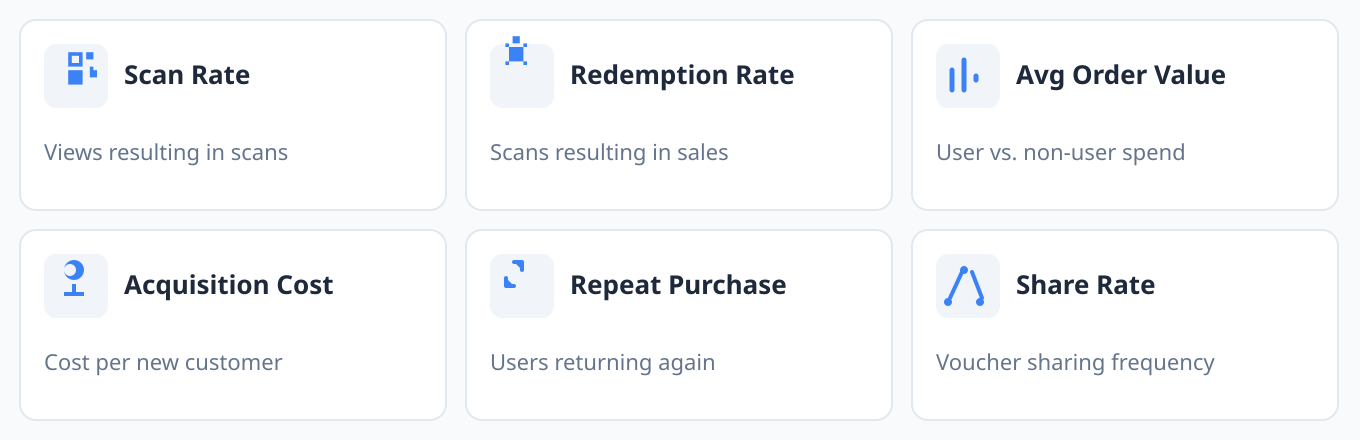
Track these key performance indicators:
Scan rate. Percentage of people who view your voucher and actually scan it.
Redemption rate. Percentage of scans that result in actual purchases.
Average order value. Compare voucher users' spending to non-voucher customers.
Customer acquisition cost. Calculate the cost per new customer acquired through vouchers.
Repeat purchase rate. Track how many voucher users return for subsequent purchases.
Share rate. Monitor how often customers share your vouchers with others.
Common Mistakes to Avoid
Don't make QR codes too small they should be at least 2x2 centimeters for reliable scanning. Avoid placing them in hard-to-reach locations or areas with poor lighting.
Never use static QR codes for campaigns that might need adjustments. Dynamic codes give you flexibility to fix errors or update offers without reprinting.
Test the mobile experience. If your landing page isn't mobile-optimized, you'll lose customers at the critical redemption moment.
Avoid overly complicated redemption processes. If customers need to jump through multiple hoops, they'll abandon the voucher.
Taking Your Voucher Strategy Further
QR code vouchers are one piece of a marketing campaign strategy. Combined with deep linking, branded domains, and analytics, they become useful tools for customer acquisition and retention.
Smler's platform provides everything you need to create, distribute, and track QR code vouchers at scale from the QR code generator to comprehensive analytics dashboards.
Published with LeafPad