
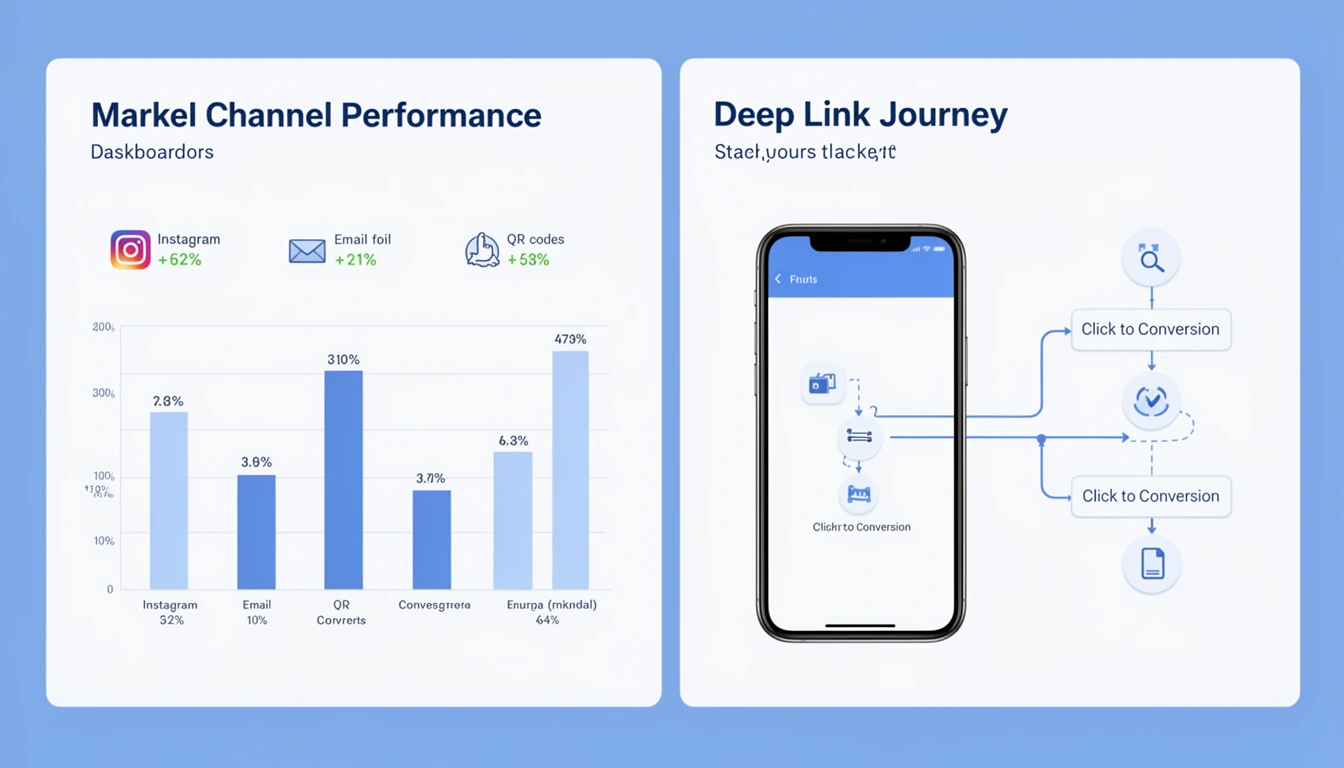
Understanding which marketing channels deliver real results isn't guesswork anymore. With deep linking analytics, marketers can trace every user interaction from initial click to in-app conversion, revealing exactly which campaigns drive meaningful engagement.
Smler's deep linking analytics transforms raw click data into actionable insights, helping you optimize marketing spend across channels from Instagram ads to offline QR code campaigns.
Why Traditional Analytics Falls Short for Marketers
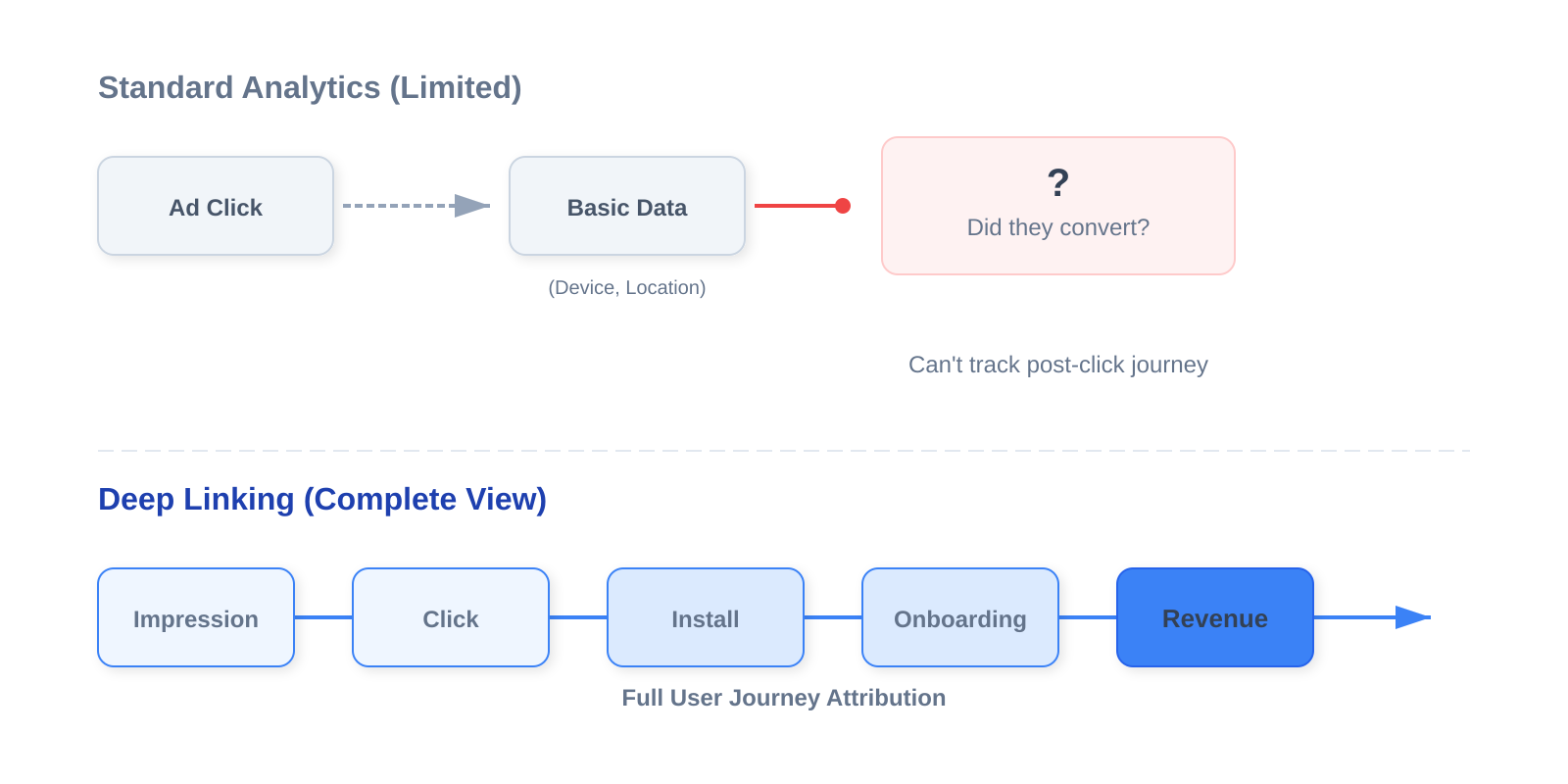
Standard URL shorteners show you clicks, locations, and devices. But they can't answer critical questions like:
Did users who clicked your Facebook ad actually install your app?
Which email campaign drove the most in-app purchases?
Are QR codes on billboards converting better than Instagram Stories?
What happened after users clicked did they bounce or complete onboarding?
This is where deep linking analytics becomes essential. Instead of tracking just the click, you track the entire user journey from ad impression through app install to final conversion.
How Smler Deep Linking Analytics Works
When you create a deep link with Smler, you're not just shortening a URL. You're building an intelligent routing system that:
Captures initial click data - Records which channel, campaign, and creative generated the click
Routes users intelligently - Sends users with your app installed directly to specific in-app content, while directing new users to app stores
Preserves context through installation - With deferred deep linking, first-time users see the intended content after installing
Tracks post-install events - Monitors what users do after arriving, from page views to purchases
This complete visibility lets you attribute conversions to specific marketing efforts with confidence.
Channel Attribution: See What's Actually Working
Create unique Smler deep links for each marketing channel, and the analytics dashboard reveals performance side-by-side:
Paid Social Media: Track which platform (Instagram, Facebook, TikTok, LinkedIn) delivers the highest-quality users. Compare cost-per-install across networks and identify which ad creatives drive actual engagement, not just clicks.
Email Marketing: Measure open rates, click-through rates, and post-click behavior. Discover if promotional emails convert better than newsletters, and segment performance by subscriber cohorts.
Influencer Partnerships: Give each influencer a unique deep link. Compare audience quality across creators one influencer might drive 5x more installs with half the followers.
Organic Social: Differentiate between paid ads and organic posts. Understand which type of content (tutorials, behind-the-scenes, user testimonials) resonates most with your community.
SMS Campaigns: Track conversion rates from text message marketing. With TRAI-compliant shortened URLs, you maintain professional messaging while gathering detailed analytics.
QR Code Marketing Analytics: Bridging Offline and Online
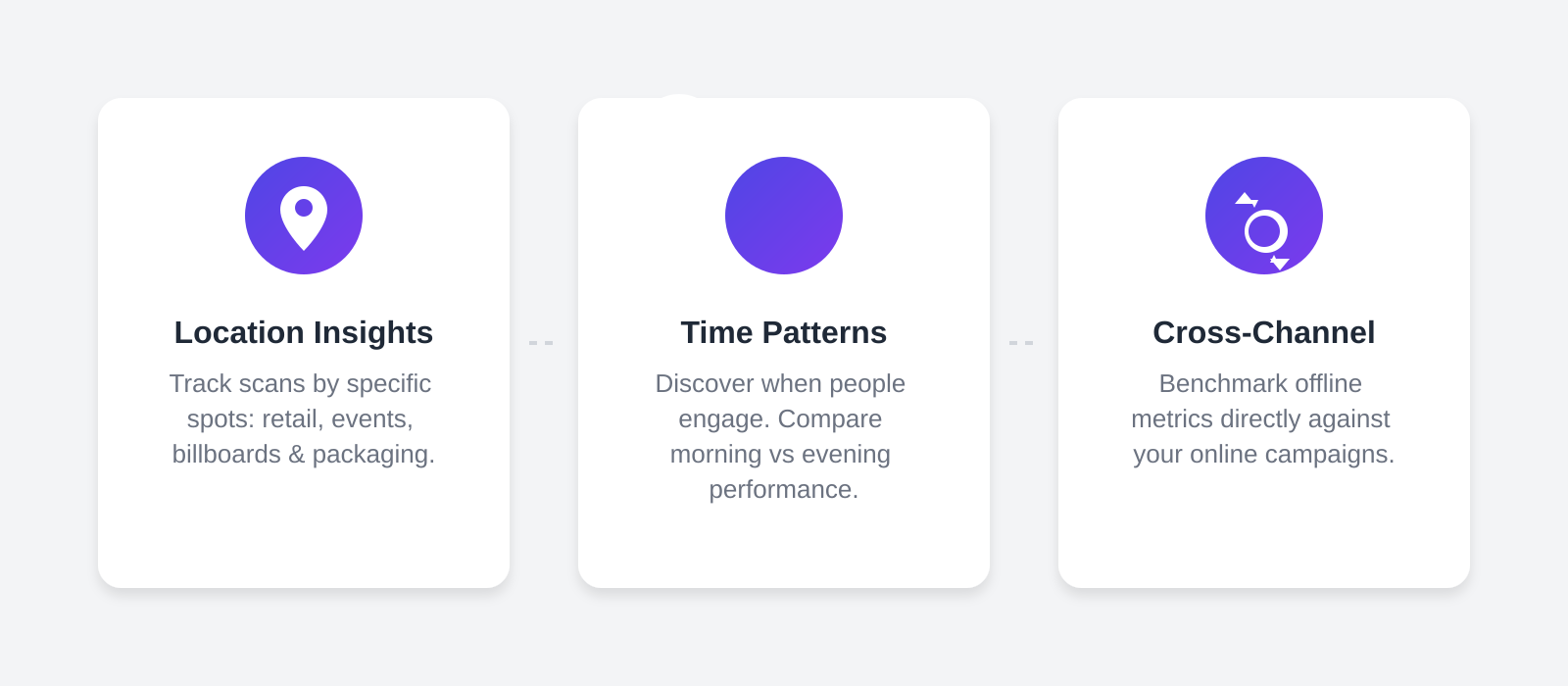
The same deep linking technology that powers digital campaigns transforms offline marketing measurement.
When you generate a QR code with Smler, you get:
Location-based insights: Place different QR codes at various physical locations retail stores, events, billboards, product packaging. Analytics reveals which locations drive the most scans and conversions.
Time-based patterns: Discover when people engage with offline materials. A billboard might perform best during morning commutes, while restaurant table tents convert during evening hours.
Cross-channel comparison: Directly compare your offline QR code campaigns against digital efforts. You might discover that $500 spent on strategically placed posters outperforms $5,000 in Facebook ads.
Post-scan behavior tracking: QR codes with deep links don't just count scans they track what happens next. Did users browse your catalog, add items to cart, or complete purchases?
Real-World Marketing Scenarios
E-commerce App Launch: A fashion retailer runs simultaneous campaigns across Instagram ads, email newsletters, and in-store QR codes. Smler analytics reveals that Instagram drives 60% of clicks but only 20% of purchases, while in-store QR codes generate 15% of clicks but 45% of revenue. The marketing team reallocates budget accordingly, doubling ROI.
Event Promotion: A concert organizer uses unique deep links for each promotional channel radio ads, street posters with QR codes, influencer posts, and email. Analytics shows poster QR codes in college neighborhoods convert 3x better than downtown locations, informing next event's placement strategy.
App Re-engagement: A food delivery app creates personalized deep links for different user segments (lapsed users, frequent orderers, new signups). Campaign analytics identifies that lapsed users respond best to discount offers on weekday lunchtimes, while frequent users prefer early dinner promotions.
Key Metrics Marketers Should Track
Smler's analytics dashboard highlights the metrics that matter:
Click-through rate by channel: Which campaigns generate initial interest?
Install conversion rate: What percentage of clicks result in app installs?
Geographic performance: Which regions respond best to your messaging?
Device and OS breakdown: Optimize campaigns for your actual user base
Hourly/daily trends: Identify optimal posting and campaign timing
Referral source accuracy: Eliminate attribution confusion with clear channel labeling
Optimizing Budget Allocation with Data
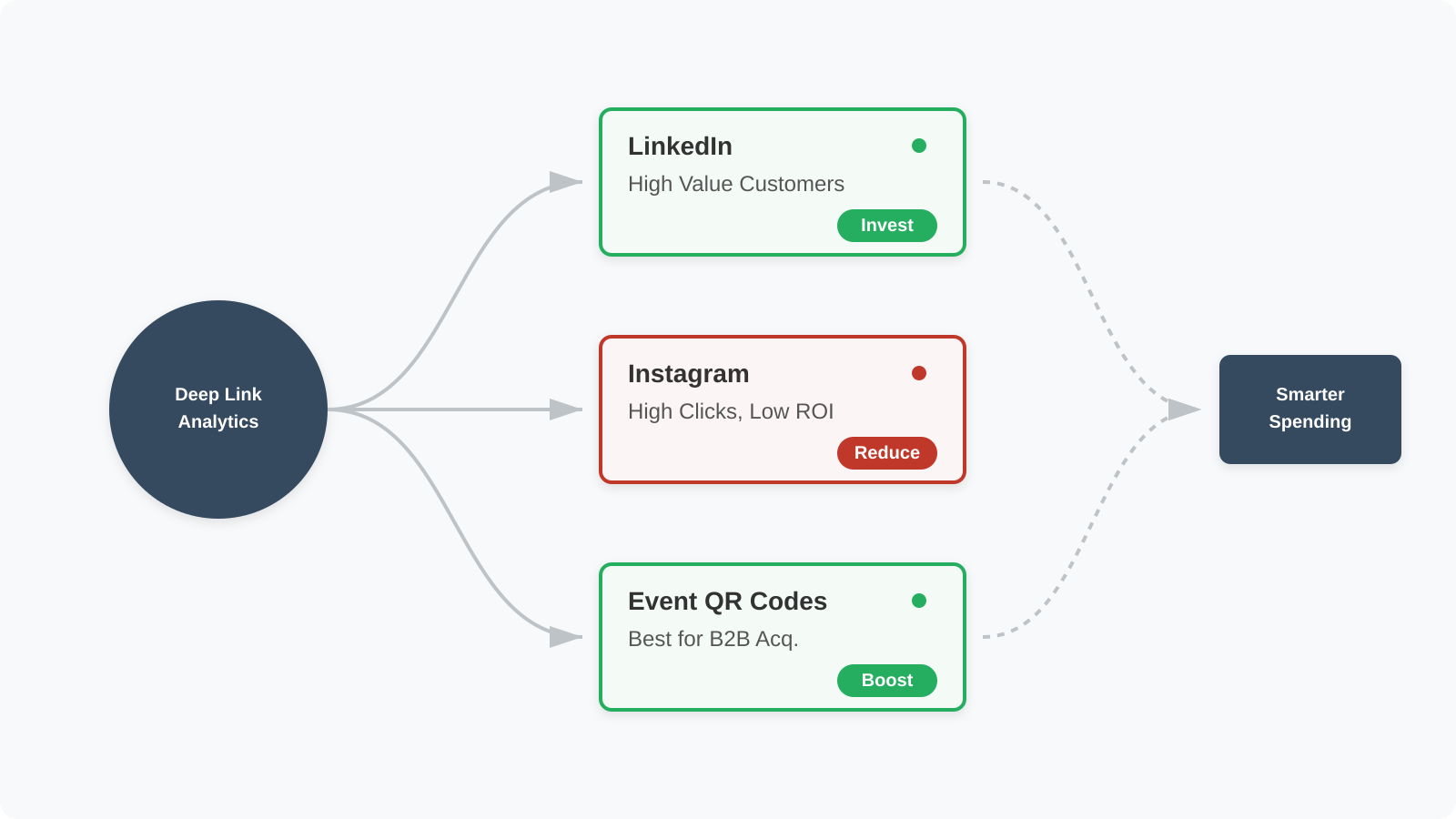
The ultimate value of deep linking analytics is smarter spending. Instead of splitting budgets evenly across channels or relying on vanity metrics, you invest based on actual conversion data.
If LinkedIn campaigns drive fewer clicks than Instagram but generate 4x more high-value customers, you know where to focus. If QR codes at conferences outperform digital ads for B2B acquisition, your event marketing budget increases.
This data-driven approach eliminates wasteful spending and compounds marketing effectiveness over time.
Getting Started with Deep Linking Analytics
Implementing channel attribution with Smler requires three simple steps:
Create campaign-specific deep links: Generate unique shortened URLs for each marketing channel and campaign
Deploy across channels: Use these links in social media, emails, QR codes, and any other marketing materials
Analyze and optimize: Review performance data regularly and adjust strategies based on what converts
The platform's intuitive interface makes tracking accessible even for small marketing teams without dedicated analytics specialists.
Conclusion
Marketing attribution doesn't have to be complicated or approximate. Deep linking analytics provides the clarity marketers need to understand which channels truly drive growth whether those channels are digital ads, email campaigns, or QR codes on product packaging.
With Smler, you transform every marketing link into a measurable experiment, building a data foundation that guides smarter decisions and maximizes return on every marketing dollar spent.