
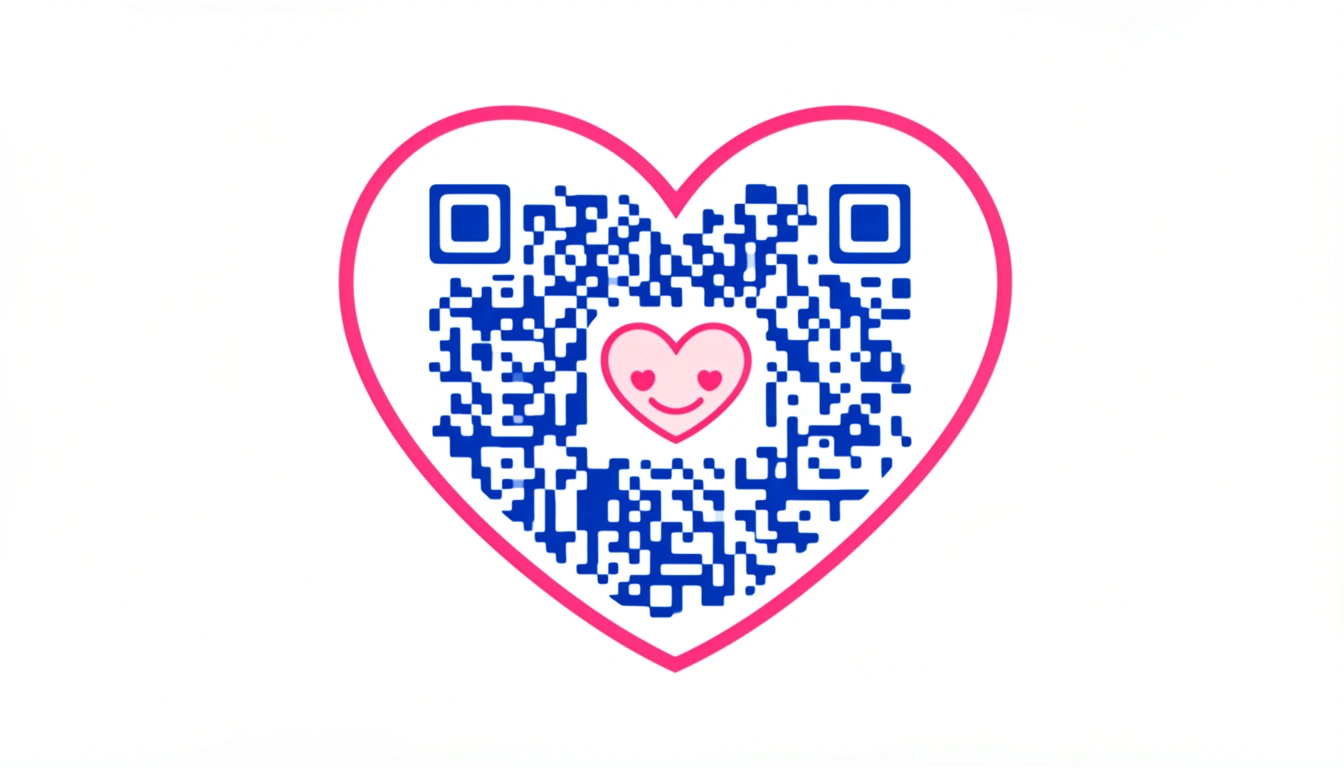
Square QR codes work fine. They do the job. But if you're running a campaign about love, charity, or gratitude, a square barcode feels a little cold. That's where heart-shaped QR codes come in. They aren't just a gimmick; in the right context, they actually get more scans.
The psychology is simple. A heart shape sets the mood before the user even opens their camera app. It signals "this is for you" or "we care," which is a lot more compelling than "scan this for data."
How Heart QR Codes Actually Work
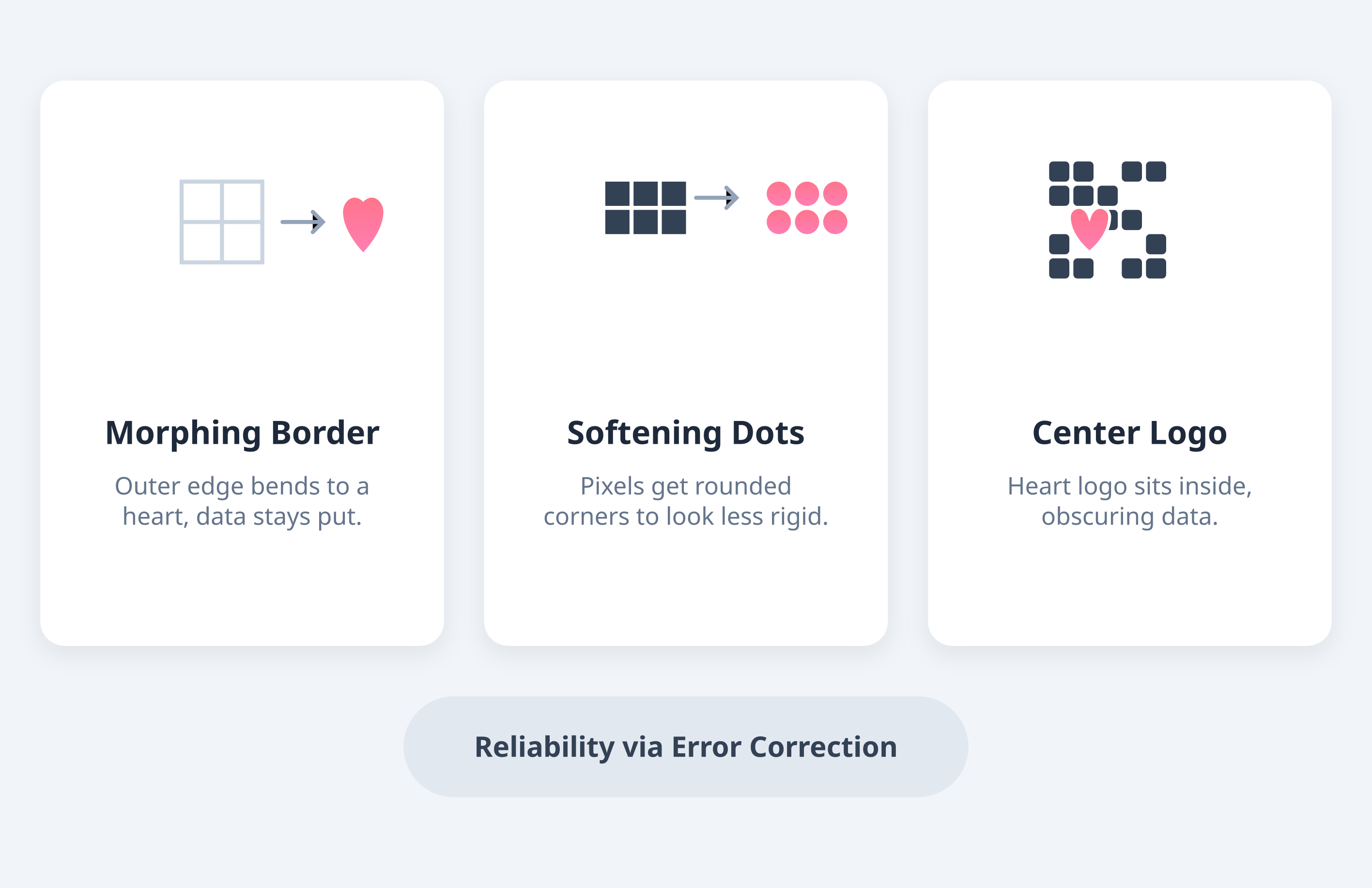
Technically, a heart-shaped QR code is just a regular code wearing a costume. It uses the same data modules and error correction as the square ones, but the geometry is tweaked.
You usually see this done a few ways:
- Morphing the border: The outer edge gets bent into a heart while the internal data stays put.
- Rounding the dots: The individual pixels get styled with softer corners so the whole thing looks less like a grid.
- Logo placement: A heart-shaped logo sits in the center. The code's error correction fills in the blanks so it still scans.
The limiting factor is reliability. Standard QR code technology allows for up to 30% error correction. That gives you some wiggle room to hide corners or overlay images. But if you get too aggressive with the design, you end up with a pretty picture that no phone can read.
Getting the Design Right
You can't just generate a heart code the same way you do a square one. You're actively fighting the scanner's ability to recognize the pattern, so you have to compensate.
Contrast is everything. Because the shape is unusual, you need deep blacks and bright whites (or very distinct colors). If a phone has to think twice, the user gives up.
Size matters. Heart shapes require more visual real estate. Don't print them smaller than 2x2 inches.
Don't trust your iPhone. iPhones are aggressive scanners; they'll read almost anything. Android phones are pickier. If you only test on your personal device, you might ship a broken code to half your audience.
Shorten your links. Long URLs mean dense data. Dense data means tiny pixels. Tiny pixels are hard to warp into a heart without breaking the scan line. Use a link shortener.
If you're printing, you can get away with finer details. On a screen, keep it bold and simple.
Where They Actually Work
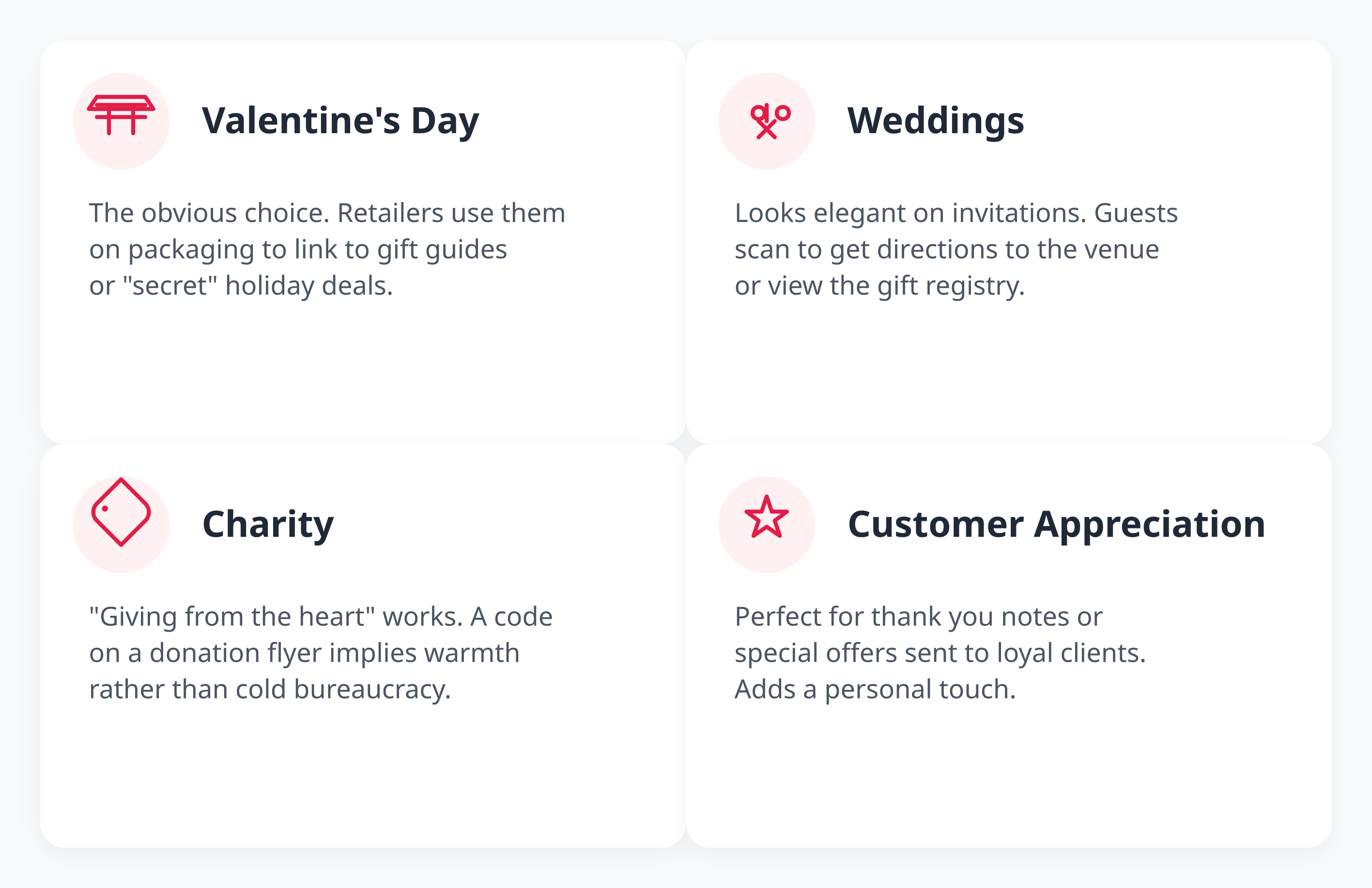
A heart code isn't a magic bullet. It works because the emotion fits the context. If you slap one on a tax document, it just looks weird.
Valentine's Day. This is the obvious one. Retailers use them on packaging to link to gift guides or "secret" deals. It fits the holiday aesthetic.
Weddings. Couples put them on invitations. It looks better than a stark square blob on a nice card. Guests scan to get directions or the registry.
Charity. "Giving from the heart" is a cliché, but it works. A heart code on a donation flyer implies warmth, not bureaucracy.
Customer appreciation. If you're sending a thank-you note, a heart code feels genuine. A square code feels like a tracking pixel.
Healthcare. Doctors' offices use them for check-in or reminders. The heart symbolizes health, which is the point.
This is just one of many innovative QR code use cases, but the numbers are convincing. In romantic or charity contexts, heart shapes can lift scan rates by 23-35% compared to standard squares.
Technical Constraints
You can't just draw a heart and hope for the best.
Crank up error correction. Set it to High (H), or 30%. You need that redundancy if you're going to hide the corners or jam a logo in the middle.
Watch the colors. QR code colors don't have to be black and white, but heart designs are finicky. Keep a contrast ratio above 4.5:1.
Keep the version low. Stick to Version 5 or lower if you can. If you try to encode a paragraph of text, the code gets too dense to morph properly.
Test it poorly. Test it in bad lighting. Test it on a cracked screen. Test it with a cheap Android phone from three years ago. That is your real audience.
Hybrid approach. Sometimes it's smarter to keep the code square and just put a heart frame around it. It’s safer and often scans better.
You can track all of this in Smler's analytics dashboard. If your scan rates are lower than a square code, the shape is probably confusing people.
Design Variations
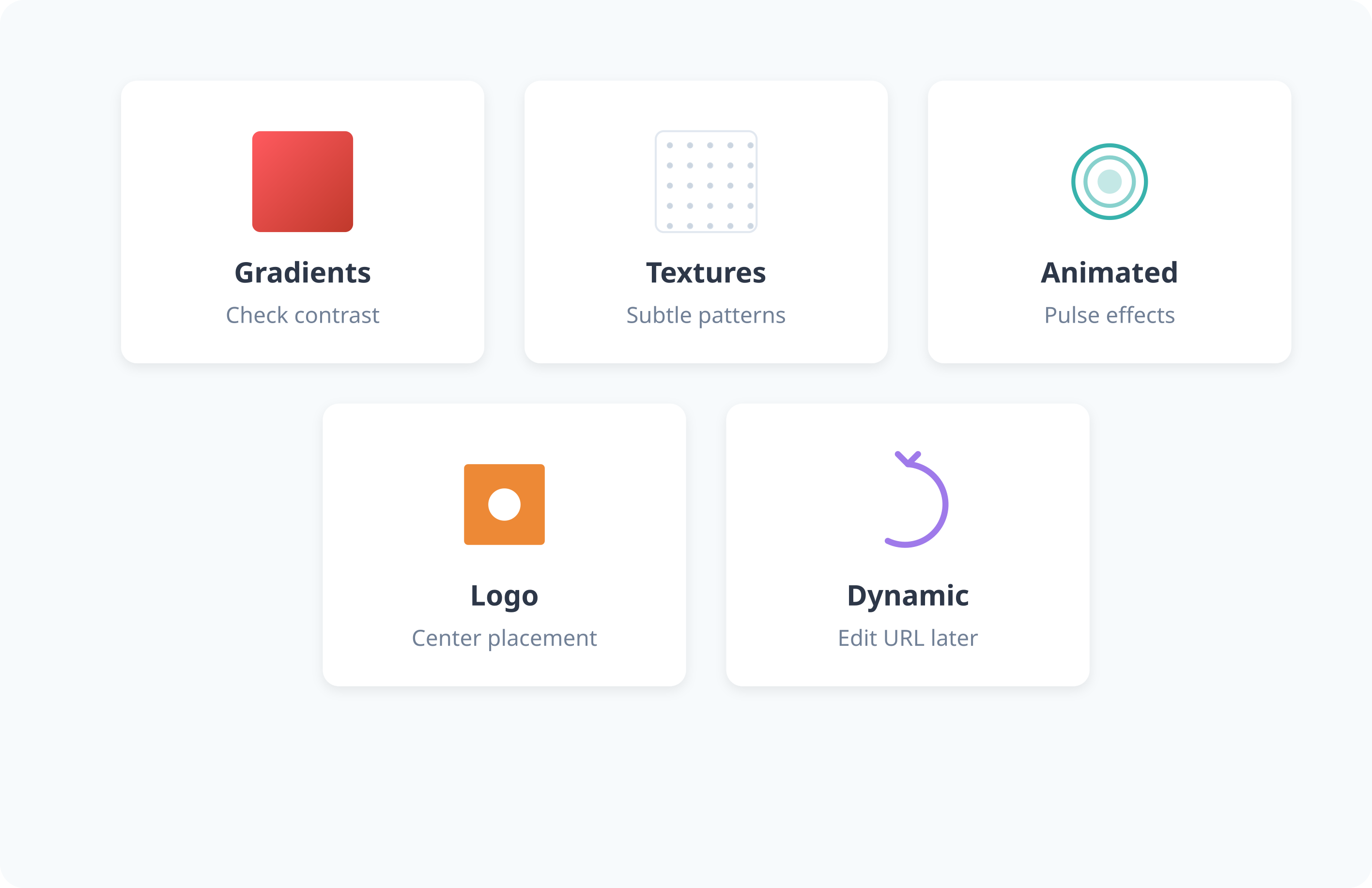
You can do more than just a pink outline.
- Gradients: A fade across the heart looks great, but check the contrast at every point. If the dark blue fades into black, it won't scan.
- Textures: A subtle background pattern works, but don't let it eat the code.
- Animated: For digital screens, a pulsing heart is a nice touch. Just don't move the code itself only the decoration around it.
- Logo integration: Treat it like icon QR codes. Put your brand logo dead center.
If you plan ahead, use dynamic codes. They let you change the URL later without reprinting the heart. Read up on types of QR codes if you want to go that route.
Tracking Performance
Does the heart shape actually help? You can't know without data.
Watch these metrics:
- Scan Rate: Do more people scan the heart than a square?
- Time to Scan: Are they fumbling? If it takes three tries to lock on, your design is too complex.
- Device split: If 90% of scans are iPhones, you have an Android problem.
- Conversion: Scans are vanity. Do they actually buy anything?
Smler's tracking capabilities let you A/B test this. Show a heart code to one group and a square to another. Let the data decide.
Common Mistakes
People mess this up constantly.
Over-designing. They add flourishes, shadows, and textures until the code stops being a code. Art doesn't scan.
Assuming it works. They test it once on a flagship phone and print 5,000 copies. Then they realize it fails on older devices.
Ignoring print specs. What looks crisp on a Retina display looks muddy on newsprint. Always get a physical proof.
Ignoring accessibility. Some users won't realize a heart shape is scannable. Label it clearly: "Scan this heart."
Also, use Smler to shorten your URL. Long links create dense codes, and dense codes are a nightmare to reshape.
Frequently Asked Questions
Q: Will heart-shaped QR codes work with all smartphone cameras? A: Most modern phones (2022 and newer) handle them fine if the contrast is high. Older devices might struggle. If you're targeting an older demographic, test thoroughly or stick to squares.
Q: How much does it cost to create heart-shaped QR codes? A: Basic creation is free on Smler's generator. If you want analytics or dynamic editing, you'll likely need a paid plan, but the design itself costs nothing.
Q: Can I change where my heart QR code points after printing it? A: Only if you use a dynamic code. Static codes are hard-coded. If you print a static code on a wedding invitation, triple-check the link before you mail them.
Q: What's the ideal size for printing heart-shaped QR codes? A: 2x2 inches minimum. Go bigger if you can. A heart shape has awkward angles that need space to be readable.
Q: Do heart QR codes really increase scan rates? A: In emotional contexts yes. 20-30% boosts are common for charity or romance. In technical contexts, they look unprofessional. Read the room.
Q: How do I ensure my heart QR code maintains branding consistency? A: Use your brand colors (assuming they contrast enough) and drop your logo in the center. Use a dynamic code to send users to a branded landing page so the experience feels cohesive after the scan.
Published with LeafPad